
A basic waiter's corkscrew does the same core job as a pricey one: it gets the cork out of the bottle. The gap between a cheap one and a nice one is usually comfort, smoothness and how it handles tricky corks, not whether it opens wine at all. If you open a bottle a few times a week, a low-cost tool covers you fine.
Cheap gadgets also let you build a small kit without a big commitment. A corkscrew, a stopper and a pourer are three separate jobs, and you can buy each one on its own as you find out what you actually use. Plenty of people buy a fancy gadget first and then never touch it. Starting small means you spend money only on the habits you really have.
There's a sweet spot, though, and it depends on the bottles you open. For everyday screw-in corks on regular bottles, something simple like a penguin-shaped corkscrew such as the True Zoo Kingsley the Penguin Corkscrew Wine Opener fits the bill. It has a 5-turn screw, soft touch wings and a stainless steel and plastic build, and it's small enough to tuck into a kitchen drawer. Spending more makes sense when you open older bottles, where fragile corks crumble, or when you want a smoother pull on long corks.

True Zoo Kingsley the Penguin Corkscrew Wine Opener
A playful penguin-shaped corkscrew with soft grip wings that's easy to use and fun to keep on the bar.
Product information
Our review: 3.8 out of 5
Product links

Before you buy anything, ask yourself three quick questions:
- How often do you open a bottle? Once a month is different from every weekend.
- Are your bottles mostly young wines, or do you open older ones with dry, brittle corks?
- Do you want to finish bottles in one night, or keep some open for later?
One safety note: corkscrews have sharp points, and foil cutters have blades. Keep your free hand out of the line of the screw, and cut away from your body. If you open sparkling wine, point the bottle away from people and hold the cork as you twist the bottle, since the pressure inside can push a cork out fast.
Basic Corkscrews That Open Bottles Without Fuss
A waiter's corkscrew is the folding kind with a screw (the worm), a lever, and a small knife for the foil. It's the style most bartenders and servers use, and it's a good first pick because it's small, cheap in its basic form, and works on almost any bottle with a natural cork. The trick is learning the lever, since that's where most of the effort and most of the broken corks come from.
The LUSCIOUZ Zero Resistance THE HELIX line is a good example of what a step up looks like. The Black version has a specially coated 5-coil worm that slides into the cork with very little resistance, plus a two-step lever with two points of support. That split pull helps with longer corks and older bottles. The Elite Silent Waiter's Corkscrew Vol.2 is a black corkscrew with a 5-coil screw and a two-stage action. The Elite Silent in Silver has a six-coil screw and the same two-stage idea. So if you want a color choice, you have black or silver, and you can pick by how many coils you want.
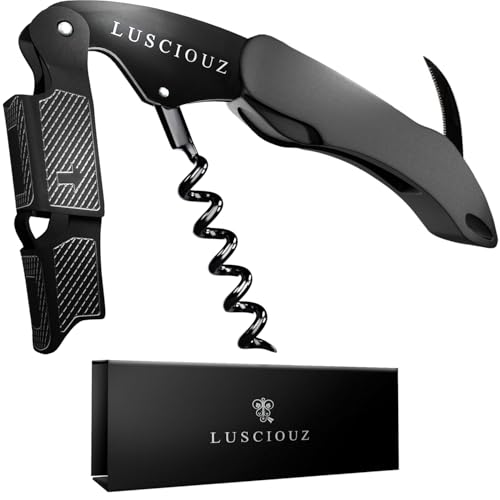
LUSCIOUZ Zero Resistance THE HELIX Waiter's Corkscrew Black
A low-friction waiter's corkscrew with a two-step lever, built for easy, quiet uncorking at home or at the table.
Product information
Our review: 4.3 out of 5
Product links
If you'd rather skip the lever, that penguin model works differently. You squeeze the winged handles to lift the cork, and the soft touch wings give you a comfortable grip. That's a friendlier route if a folding lever feels fiddly.
A few habits help with any basic corkscrew:
- Cut the foil below the lip of the bottle so nothing drips on the cork's edge as you pour.
- Set the tip of the screw in the center of the cork and twist it straight down. A crooked screw is the usual cause of crumbling.
- Stop before the screw pokes out the bottom of the cork, or bits can drop into the wine.
- Pull slowly for the last bit, so the cork doesn't pop out and splash.
For an old bottle with a dry, fragile cork, a two-part remover like The Durand Two Part Wine Cork Removal Device is built for that job. It pairs a helix with a blade and is made from polished stainless steel, which wipes clean easily. It costs more than a plain waiter's corkscrew, so it makes sense only if you open older bottles now and then.
Stoppers and Pourers That Protect Your Wine
A wine stopper does one job: it plugs an open bottle so the wine sits in a smaller air gap and doesn't spill in the fridge. A basic one costs very little, and it's worth having a couple on hand. Look for a snug fit in the neck of a standard bottle. If it wobbles or slides out when you tilt the bottle, it won't do much. Stand the bottle upright in the fridge unless the stopper's maker says it seals well enough to lay flat.
Vacuum pumps are a common budget add-on, but treat their claims with some caution. Some people say pumping air out helps wine last longer. Others say the benefit is limited and that pumping may pull out some aroma. If you try one, use it as a convenience, and don't count on it to keep a great bottle fresh for weeks. A plain stopper plus the fridge covers most everyday needs.
If you want to pour a single glass without pulling the cork at all, the Coravin Three SL Wine-by-the-Glass System works differently. It uses a thin needle to pull wine out while the cork stays in place. The kit includes a wine saver, an argon gas capsule, a needle clearing tool and a wine bottle sleeve. It sits well above stopper pricing, so it suits people who open a bottle for one glass at a time. The Coravin Six Plus Wine Accessory Kit in black is another option in that family. Since these systems use pressurized gas, read the maker's manual for step order and warnings before first use, and follow what it says about damaged bottles.

Coravin Three SL Wine-by-the-Glass System
The Ultimate Wine Preservation System for Every Occasion
Product information
Product Review Score
4.61 out of 5 stars
(174 reviews)Product links

Pourers and decanters are a different kind of tool. A drip-stop pourer slips into the bottle neck and helps keep drips off the tablecloth. If you want something for the table, the French Bulldog Whiskey/Wine Decanter by The Wine Savant is a lead-free crystal dog-shaped piece with a tail-shaped pouring spout. It's more about looks and serving than protecting wine, so think of it as a fun extra. Claims that decanters or aerators improve flavor come down to personal taste, so try one and see if you notice a difference.
Pros
- The two-step lever on the LUSCIOUZ-style waiter's corkscrew gives two points of support, which eases the pull on longer or older corks.
- The specially coated worm slides into the cork with very little resistance, so opening a bottle feels smoother.
- The two-part remover's blade and helix work together, which helps older or fragile corks come out intact.
- The penguin opener is compact and simple to use for everyday corks.
- Simple openers have no batteries or gas capsules to manage, so there is less to maintain than with more complex wine tools.
Cons
- Cheap corkscrews and openers often have thinner screws and lighter levers, so a stubborn or crumbly cork can still give you trouble.
- Single-purpose gadgets add up fast, and a drawer full of openers, pourers and stoppers takes up more space than most people expect.
- Decorative pieces such as novelty openers or decanters can cost more for looks than function, so you may pay for style you don't need.
- Gas-based preservation systems need ongoing refills, which means continuing costs.
- Cheaper openers may struggle with very old or fragile corks, so you may eventually need a specialist tool.
How to Choose Your First Wine Gadgets
The easiest way to pick your first wine gadgets is to start with how you actually drink. Count how many bottles you open in a month, then decide which problem annoys you most: opening them, pouring them, or what to do with the leftovers.
If you open a bottle every week or so, a waiter's corkscrew covers it. Compare options on a few concrete things: the number of coils on the screw, whether the lever is one step or two, and the color. The silver model with a six-coil screw and a two-stage action suits you if you tend to open longer corks and want less effort on the pull. Pick the one that feels natural when you picture opening a bottle with one hand on the neck.
Next, check what you'll really do with the gadget at home. Ask yourself a few quick questions:
- Do I have a drawer slot for this, or will it end up in a box?
- Will I use it every time I open a bottle, or twice a year?
- Does it need refills or batteries, and am I okay buying those?
- Do I want it for function, or because it looks fun on the table?
That last question matters with gifts too. If you're buying for someone who already has a corkscrew, a bag of snacks pairs well with a bottle. The Wine Country Gift Baskets The Connoisseur Gourmet Food Gift Basket has garlic herb crackers, olive tapenade and smoked Gouda spread, so it works when you want a gift that skips the gadget guesswork.
A sensible starter set is one good corkscrew, one stopper that fits a standard bottle neck, and nothing else for a month or two. Use it, notice what bugs you, then shop for that.


